Herpes is one of the most common viral STIs. It is caused by the herpes simplex virus, usually called HSV. There are two main types: HSV-1 and HSV-2.
HSV-1 is often associated with oral herpes, like cold sores, but it can also cause genital herpes. HSV-2 is more commonly associated with genital herpes. Both types can be passed through skin-to-skin contact, including vaginal, anal, and oral sex.
Having herpes does not mean someone is dirty, irresponsible, or unable to have a healthy sex life. Herpes is common, manageable, and treatable.
Quick Facts
- Herpes can be oral, genital, or both.
- Many people with herpes do not have symptoms or do not recognize their symptoms.
- Herpes can still be passed even when there are no visible sores.
- There is no cure for herpes, but antiviral medication can reduce symptoms, shorten outbreaks, and lower the chance of passing it to partners.
- Condoms can reduce risk, but they do not remove the risk completely because herpes can affect areas not covered by a condom.
Symptoms
Some people never notice symptoms. Others may have symptoms that look or feel like:
- Painful blisters or sores around the mouth, genitals, or anus
- Tingling, itching, or burning before sores appear
- Pain when urinating
- Swollen lymph nodes
- Fever, body aches, or flu-like symptoms during a first outbreak
Herpes symptoms can come back over time. For many people, outbreaks become less frequent or less intense.
How Herpes Spreads
Herpes spreads through direct skin-to-skin contact with the area where the virus is present. This can happen through:
- Kissing
- Oral sex
- Vaginal sex
- Anal sex
- Genital-to-genital contact
- Contact with a herpes sore or area of viral shedding
Herpes is most likely to spread during an outbreak, but it can also spread when someone has no symptoms.
Testing
Herpes testing can be confusing. A healthcare provider may test a sore directly with a swab when symptoms are present. Blood testing may also be used in some situations, but it has limits.
A standard STI panel does not always include herpes testing. If you want to know whether herpes testing is included, ask your provider directly:
“Does this STI panel include HSV-1 and HSV-2 testing?”
Testing may be especially important if you have symptoms, have a partner with herpes, or were told you may have been exposed.
Herpes Treatment
Herpes is not curable, but it is treatable.
Healthcare providers may prescribe antiviral medication such as acyclovir, valacyclovir, or famciclovir. These medications may be used:
- During an outbreak to shorten symptoms
- Daily to reduce outbreaks
- Daily to lower the chance of passing herpes to partners
Talk with a healthcare provider about what treatment option is right for you.
Reducing Risk
You can lower the chance of getting or passing herpes by:
- Avoiding sex during outbreaks or when tingling, itching, burning, or sores are present
- Using condoms or barriers during vaginal, anal, and oral sex
- Talking openly with partners about STI history and testing
- Asking a provider about daily antiviral medication
- Getting tested when symptoms appear
- Keeping track of outbreaks, testing, and partner communication
Herpes and Stigma
The stigma around herpes is often worse than the condition itself. Herpes is common, and many people who have it live normal, healthy romantic and sexual lives.
What matters most is communication, care, testing, and making informed choices with partners.
How KISS Can Help
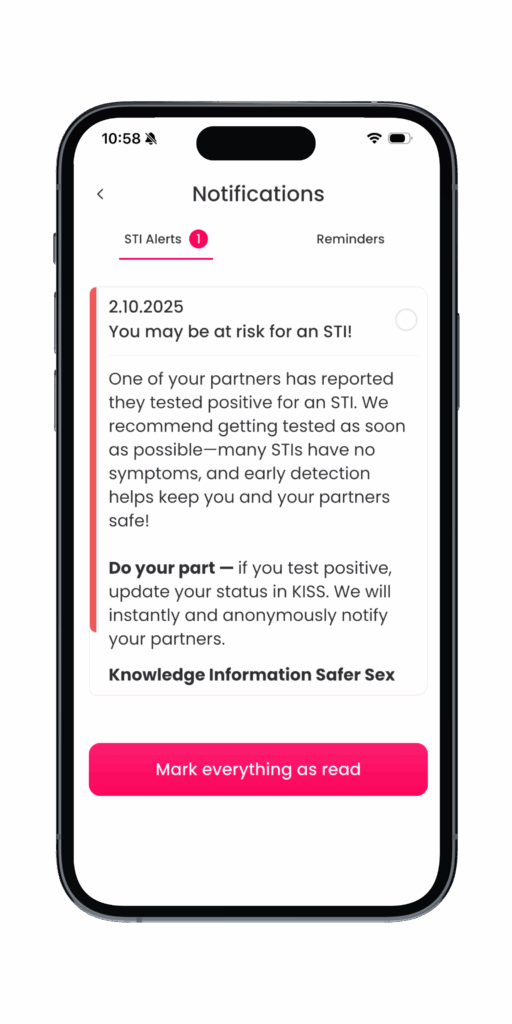
KISS helps make sexual health easier to manage privately.
With KISS, users can:
- Track STI testing
- Set testing reminders
- Set medication reminders
- Keep a private sexual health history
- Share safer sex information with partners
- Send anonymous partner alerts when needed
Sexual health should not be confusing, shame-filled, or hard to talk about. KISS helps make those conversations easier.

When to See a Healthcare Provider
See a healthcare provider if you have painful sores, blisters, burning, itching, flu-like symptoms, or think you may have been exposed to herpes.
This page is for education only and does not replace medical advice, diagnosis, or treatment from a healthcare professional.