KISS SEXUAL HEALTH GUIDE
Doxy PEP: STI Prevention, Dosing, Effectiveness, and Safety
Doxy PEP is a sexual-health strategy that involves taking the antibiotic doxycycline after sex to reduce the likelihood of certain bacterial sexually transmitted infections. Research has found that Doxy PEP can substantially reduce the likelihood of chlamydia and syphilis. It may also reduce the likelihood of…

01
Doxy PEP Quick Facts
02
What Is Doxy PEP
03
Which STIs Can Doxy PEP Help Prevent
04
What Does Doxy PEP Not Prevent
The essential guide.
Doxy PEP is a sexual-health strategy that involves taking the antibiotic doxycycline after sex to reduce the likelihood of certain bacterial sexually transmitted infections.
Research has found that Doxy PEP can substantially reduce the likelihood of chlamydia and syphilis. It may also reduce the likelihood of gonorrhea, although its protection against gonorrhea has been less consistent.
Doxy PEP does not prevent every STI, does not replace regular testing and is not intended to treat an infection that someone already has. It should be used only after discussing its possible benefits and risks with a qualified healthcare provider.
You can also read the official CDC overview of Doxy PEP and the more detailed CDC clinical guidelines for Doxy PEP.
Doxy PEP Quick Facts
- Doxy PEP stands for doxycycline post-exposure prophylaxis.
- The CDC-recommended dose, when prescribed, is 200 mg of doxycycline.
- It should be taken as soon as possible and no later than 72 hours after oral, anal or vaginal sex.
- No more than 200 mg should be taken within a 24-hour period.
- It has been shown to reduce chlamydia and syphilis infections by more than 70% and gonorrhea infections by approximately 50% among the populations studied.
- People using Doxy PEP should continue routine STI testing at the anatomical sites where exposure occurred.
- The need for this medication should generally be reassessed with a healthcare provider every three to six months.
What Is Doxy PEP?
“PEP” means post-exposure prophylaxis. It refers to medication taken after a possible exposure to reduce the likelihood of an infection.
With Doxy PEP, a healthcare provider prescribes doxycycline for a person to take shortly after oral, anal or vaginal sex. Doxycycline is an antibiotic that is already used to treat several bacterial infections.
The CDC recommends that a prescribed 200 mg dose be taken as soon as possible after sex and within 72 hours. It should not be taken more than once within a 24-hour period.
This medication is different from a complete antibiotic treatment prescribed after someone receives a positive STI result. Anyone who has symptoms, receives a positive result or learns that a partner has tested positive should contact a healthcare provider for appropriate testing and treatment.
Which STIs Can Doxy PEP Help Prevent?
It is intended to reduce the likelihood of certain bacterial STIs.
Chlamydia
Doxy PEP has demonstrated strong protection against chlamydia in the clinical trials reviewed by the CDC.
Chlamydia can affect the genitals, rectum and throat. It also frequently causes no noticeable symptoms. Read the complete KISS guide to chlamydia symptoms, testing, treatment and partner notification.
Syphilis
Doxy PEP has also demonstrated strong protection against syphilis among the populations included in clinical trials.
Syphilis can progress through multiple stages and may cause serious health complications when it is not diagnosed and treated. Learn more about syphilis symptoms, testing, treatment, stages and prevention.
Gonorrhea
Doxy PEP may reduce gonorrhea infections, but protection has been less consistent than it has been for chlamydia or syphilis.
One reason is that some gonorrhea strains are already resistant to tetracycline-class antibiotics. Across the major trials reviewed by the CDC, Doxy PEP reduced gonorrhea infections by approximately 50%, although results differed between studies and locations.
Read the KISS guide to gonorrhea symptoms, testing, treatment and prevention.
What Does Doxy PEP Not Prevent?
Doxycycline is an antibiotic. It should not be expected to prevent infections caused by viruses.
Doxy PEP does not prevent:
- HIV
- Herpes
- HPV
- Mpox
- Viral hepatitis
- Pregnancy
It also does not guarantee that someone will avoid chlamydia, gonorrhea or syphilis.
Other prevention options may include HIV PrEP, emergency HIV PEP, condoms, vaccinations, regular testing and open communication with sexual partners. Learn more in the KISS guide to HIV testing, PrEP, symptoms and prevention.
For a broader overview, visit the KISS guide to common STIs and STDs.
How Effective Is Doxy PEP?
Clinical trials studied people who took a 200 mg dose of doxycycline shortly after sex.
According to the CDC’s review of the evidence, medication reduced:
- Syphilis infections by more than 70%
- Chlamydia infections by more than 70%
- Gonorrhea infections by approximately 50%
The major U.S. DoxyPEP trial found that the combined incidence of chlamydia, gonorrhea and syphilis was approximately two-thirds lower among participants assigned to Doxy PEP than among those receiving standard care. You can read the published DoxyPEP clinical trial in The New England Journal of Medicine.
The results do not mean that medication provides complete protection. Its effectiveness can vary depending on the infection, antibiotic resistance, medication use and population.
Who Should Consider Doxy PEP?
The CDC recommends that healthcare providers discuss Doxy PEP with:
Gay, bisexual and other men who have sex with men, as well as transgender women, who were diagnosed with chlamydia, gonorrhea or syphilis during the previous 12 months.
A healthcare provider may also discuss it through shared decision-making with someone in these populations who has not recently been diagnosed with an STI but expects sexual activity that could increase the likelihood of exposure.
Research involving cisgender women, heterosexual cisgender men, transgender men and some other populations remains limited. Healthcare providers must therefore use clinical judgment and shared decision-making when considering Doxy PEP outside the populations covered by the CDC recommendation.
This is not a judgment about someone’s sex life. It is one possible prevention tool that can be considered based on a person’s health, sexual activity, STI history and preferences.
How Do You Take Doxy PEP?
When Doxy PEP has been prescribed, the CDC recommends:
Take 200 mg of doxycycline as soon as possible after oral, anal or vaginal sex and no later than 72 hours afterward. Do not take more than 200 mg within 24 hours.
Additional instructions include:
- Follow the directions on your prescription.
- Take only the number of pills that your provider says equals 200 mg.
- Do not take an extra dose after every sexual encounter if you have already taken 200 mg within the past 24 hours.
- Do not share the prescription with another person.
- Do not use leftover antibiotics without medical guidance.
- Continue attending recommended testing and follow-up appointments.
A provider should prescribe enough medication based on anticipated sexual activity until the next follow-up appointment. The need for continued use should generally be reassessed every three to six months.
How to Reduce Doxycycline Side Effects
Possible doxycycline side effects include:
- Nausea
- Diarrhea
- Stomach irritation
- Increased sensitivity to sunlight
- Irritation or inflammation of the esophagus
To reduce irritation:
- Take the medication with food and a full glass of water.
- Remain sitting or standing after taking it.
- Do not lie down for at least one hour.
- Follow your provider’s instructions about separating doxycycline from antacids, calcium, magnesium or iron supplements.
- Use sunscreen and protective clothing when outdoors.
The timing recommendations can differ depending on the specific supplement or medication. MedlinePlus advises separating some antacids, calcium supplements and magnesium-containing products from doxycycline by one to two hours. Iron products may require a longer separation. Review the complete MedlinePlus doxycycline drug information and follow the instructions from your provider or pharmacist.
Tell your provider about all medications, vitamins, minerals and supplements you take before beginning Doxy PEP.
Seek urgent medical attention for symptoms such as difficulty breathing, swelling of the face or throat, a severe blistering rash or other signs of a serious reaction.
Doxy PEP and Pregnancy
People who are pregnant, may become pregnant, are trying to become pregnant or are breastfeeding should tell their healthcare provider before taking doxycycline.
Current evidence supporting Doxy PEP in people exposed through receptive vaginal sex is limited. Medication decisions during pregnancy or breastfeeding should be made with a healthcare professional who can consider individual circumstances and available alternatives.
Do You Still Need STI Testing While Using Doxy PEP?
Yes. Doxy PEP does not prevent every infection, and many STIs can be present without noticeable symptoms.
The CDC recommends bacterial STI testing before beginning Doxy PEP and every three to six months while using it. Testing should be performed at the anatomical sites where exposure occurred.
Depending on the types of sex someone has, testing may include:
- A urine or urethral test
- A throat swab
- A rectal swab
- A vaginal or cervical swab
- A blood test for syphilis
- HIV testing
A urine test alone may not identify an infection in the throat or rectum.
Read the KISS guide to STI testing windows and how soon after sex to get tested. You can also learn how often to get tested for STDs and STIs.
The CDC maintains a confidential testing and vaccination locator for people looking for HIV, STI and viral-hepatitis services, including free or lower-cost options.
Doxy PEP vs. HIV PrEP and HIV PEP
Although their names sound similar, these medications prevent different infections and are used differently.
Doxy PEP
Doxycycline taken after sex to reduce the likelihood of certain bacterial STIs, particularly chlamydia and syphilis.
HIV PrEP
HIV pre-exposure prophylaxis is medication taken before a potential exposure to reduce the likelihood of acquiring HIV. Depending on the medication, PrEP may be taken as pills or administered through scheduled injections.
HIV PrEP does not prevent other STIs or pregnancy. Read more through the CDC’s HIV PrEP guide.
HIV PEP
HIV post-exposure prophylaxis is an emergency course of HIV medication started after a possible exposure. It must be started within 72 hours, and starting sooner is better.
Someone who may have recently been exposed to HIV should contact a healthcare provider, urgent care center or emergency department immediately. Read the CDC’s HIV PEP guidance.
Some people may use Doxy PEP and HIV PrEP as parts of the same sexual-health plan. A provider should review each prescription, possible interactions and required testing.
Could Doxy PEP Contribute to Antibiotic Resistance?
Antibiotic resistance is an important consideration.
Using antibiotics can encourage certain bacteria to become less responsive to those medications. Researchers are studying whether widespread or long-term Doxy PEP use could increase resistance in gonorrhea or other bacteria.
Researchers are also evaluating its possible effects on bacteria that normally live in the gut, nose and on the skin. Available evidence suggests that short-term harms are generally limited, but some potential long-term effects remain uncertain.
These concerns are why Doxy PEP should be:
- Prescribed by a healthcare professional
- Used only as directed
- Combined with routine STI testing
- Reviewed every three to six months
- Focused on situations in which the expected benefits outweigh the potential risks
Does Doxy PEP Treat an STI You Already Have?
No. A single Doxy PEP dose is intended to help prevent certain infections after sex. It is not a complete treatment regimen for an existing infection.
Contact a healthcare provider if:
- You experience burning, discharge, sores, a rash or pelvic, testicular or rectal pain.
- A partner tells you that they tested positive.
- You receive a positive STI result.
- You believe you may already have an infection.
- Your symptoms continue even after treatment.
Do not attempt to treat an infection using leftover Doxy PEP pills. Treatment depends on the infection, symptoms, exposure sites, test results, allergies and possible antibiotic resistance.
How Can You Get Doxy PEP?
Medication requires a prescription. You may be able to discuss it with:
- A primary-care provider
- An HIV PrEP provider
- A sexual-health or STI clinic
- An LGBTQ+ health center
- A local health department
- A qualified telehealth provider
The CDC’s National Prevention Information Network offers a Doxy PEP service locator for people looking for nearby providers and programs.
Partner Communication Still Matters
Doxy PEP can reduce the likelihood of some infections, but no prevention tool works perfectly.
If you test positive for an STI, notifying recent partners gives them an opportunity to get tested and receive treatment. Prompt communication can help protect their health, reduce the chance of reinfection and prevent an infection from being passed to others.
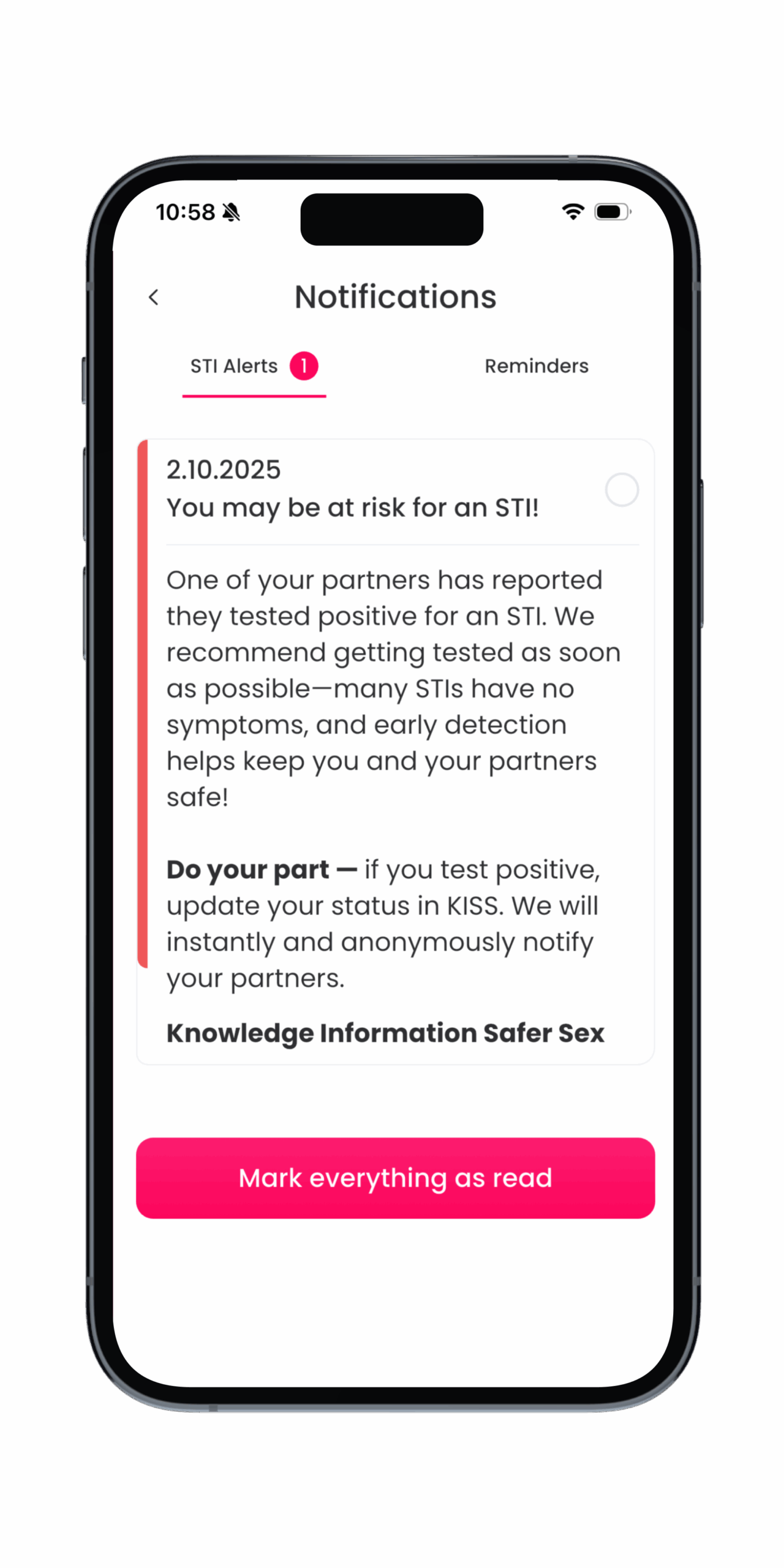
KISS is an anonymous STI notification app that helps users:
- Track sexual encounters privately
- Record STI screening history
- Set testing and medication reminders
- Receive partner alerts
- Notify partners anonymously when action may be needed
- Access stigma-free sexual-health information
Explore more sexual-health information from KISS.
Knowledge. Information. Safer Sex.
Frequently Asked Questions About Doxy PEP
The prescribed 200 mg dose should be taken as soon as possible after sex and no later than 72 hours afterward. Do not take more than 200 mg within 24 hours.
The CDC recommendation covers oral, anal and vaginal sex. Doxy PEP may reduce certain bacterial infections that can be transmitted during oral sex, but it does not prevent every oral, throat or genital infection.
When prescribed, Doxy PEP may be taken as frequently as once per day when needed. The maximum recommended amount is 200 mg within a 24-hour period.
Doxy PEP should not be started using leftover antibiotics. A healthcare provider should determine whether it is appropriate, review medication interactions, prescribe the correct amount and arrange follow-up testing.
No. Doxy PEP targets certain bacterial STIs. It does not prevent HIV. HIV PrEP is used before possible HIV exposure, while emergency HIV PEP is used after a possible exposure.
No. Research suggests that Doxy PEP can reduce gonorrhea infections, but its effectiveness is less consistent than its effectiveness against chlamydia and syphilis. Antibiotic-resistant gonorrhea can reduce the protection it provides.
Yes. Doxy PEP does not prevent every STI or pregnancy. Condoms can reduce the likelihood of HIV, certain other STIs and pregnancy.
Clinical trials included people taking HIV PrEP as well as people living with HIV. Both may be included in the same prevention plan, but a provider should review the person’s medications and testing needs.
The Bottom Line
Doxy PEP is an important prevention option that can substantially reduce chlamydia and syphilis infections and may also lower the likelihood of gonorrhea for some people.
It works best when it is prescribed appropriately, taken promptly after sex and combined with regular testing and comprehensive sexual healthcare.
Talk openly with a healthcare provider about your sexual activity, STI history, medications, supplements and prevention goals. Together, you can determine whether Doxy PEP belongs in your sexual-health plan.
Medical Disclaimer
This page is provided for general educational purposes and is not a substitute for individualized medical advice, diagnosis or treatment. Do not begin, stop or change any medication without consulting a qualified healthcare professional.
Last medically reviewed: July 2026