KISS SEXUAL HEALTH GUIDE
Gonorrhea: Symptoms, Testing, Treatment, and Prevention

01
Symptoms, Testing, Treatment, and Prevention
02
Statistics
03
What Is Gonorrhea
04
How Does Gonorrhea Spread
The essential guide.
Symptoms, Testing, Treatment, and Prevention
Gonorrhea is a common bacterial sexually transmitted infection that can affect the genitals, rectum, throat, and occasionally the eyes. It is treatable and curable, but many people do not notice symptoms and may not know they have it.
Having gonorrhea does not mean someone is dirty, irresponsible, or careless. Sexually transmitted infections are common, and testing is a routine part of taking care of your health.
KISS helps users learn about gonorrhea and other common STIs and STDs, set testing reminders, track encounters privately, and notify partners anonymously when needed.
Statistics
Gonorrhea remains one of the most commonly reported sexually transmitted infections in the United States and worldwide.
Important gonorrhea statistics include:
- 543,409 cases were reported in the United States in 2024.
- The national rate was approximately 159.8 reported cases per 100,000 people.
- Reported U.S. cases declined approximately 9.6% between 2023 and 2024.
- The World Health Organization estimated 82.4 million new infections worldwide in 2020 among adults ages 15–49.
- Gonorrhea can affect the genitals, rectum, throat, and eyes.
- Many infections cause mild symptoms or no symptoms at all.
The 2024 U.S. figures are provisional and may change slightly when finalized. Although the decline is encouraging, more than half a million reported cases in one year show why testing and prevention remain important.
What Is Gonorrhea?
Gonorrhea is caused by the bacterium Neisseria gonorrhoeae. It infects moist tissues and mucous membranes in different parts of the body.
Depending on the type of sexual contact, gonorrhea can infect the:
- Cervix
- Vagina
- Urethra
- Penis
- Rectum
- Throat
- Eyes
A person can have gonorrhea in more than one body location at the same time. For example, someone may have both throat and rectal gonorrhea without having a genital infection.
How Does Gonorrhea Spread?
Gonorrhea can spread through:
- Vaginal sex
- Anal sex
- Oral sex
- Contact with infected genital or rectal fluids
- Childbirth when a pregnant person has an untreated infection
Gonorrhea can spread even when the person who has it feels healthy and has no noticeable symptoms.
The location of the infection often depends on the type of sexual contact. Oral exposure can lead to throat gonorrhea, while receptive anal sex can lead to rectal gonorrhea.
Can You Have Gonorrhea Without Symptoms?
Yes. Gonorrhea frequently causes no obvious symptoms.
People with cervical, rectal, or throat infections are especially likely to have mild symptoms or no symptoms at all. Someone can feel completely healthy and still have gonorrhea or pass it to another person.
Testing is the only reliable way to know whether someone has gonorrhea.
Gonorrhea Symptoms
Symptoms vary depending on where the infection is located. When symptoms occur, they may begin approximately 1–14 days after exposure, although some infections remain unnoticed for much longer.
Gonorrhea Symptoms Affecting the Penis or Urethra
Possible symptoms include:
- Burning or pain when urinating
- White, yellow, or green discharge from the penis
- Painful or swollen testicles
- Irritation or discomfort inside the urethra
Testicular pain and swelling are less common but should be evaluated by a healthcare provider.
Gonorrhea Symptoms Affecting the Vagina or Cervix
Possible symptoms include:
- Increased or unusual vaginal discharge
- Burning or pain when urinating
- Bleeding between periods
- Bleeding after sex
- Pelvic or lower abdominal pain
- Pain during sex
These symptoms may be mistaken for a urinary tract infection, yeast infection, or another vaginal infection. Many people with cervical gonorrhea have no symptoms.
Rectal Gonorrhea Symptoms
Rectal gonorrhea can occur after receptive anal contact. It frequently causes no symptoms.
When symptoms occur, they may include:
- Anal itching
- Rectal pain or soreness
- Discharge from the rectum
- Bleeding
- Painful bowel movements
A urine test does not replace a rectal swab when the rectum may have been exposed.
Throat Gonorrhea Symptoms
Throat gonorrhea can occur after giving oral sex to someone with a genital or rectal infection.
Most throat infections cause no symptoms. When symptoms occur, they may include:
- Sore throat
- Throat redness
- Throat discomfort
- Swollen lymph nodes
Throat gonorrhea can be harder to eliminate than genital or rectal gonorrhea and requires site-specific testing.
Gonorrhea in the Eyes
Gonorrhea can occasionally infect the eyes after infected fluids come into contact with them.
Possible symptoms include:
- Eye redness
- Pain or irritation
- Swelling
- Discharge
- Sensitivity to light
Eye symptoms following a possible exposure should be evaluated promptly.
How Is Gonorrhea Tested?
Gonorrhea is usually diagnosed with a molecular test called a nucleic acid amplification test, commonly shortened to NAAT.
The sample used depends on the part of the body that may have been exposed.
Urine Testing
A urine sample is often used to test for infection in the urethra. It is commonly used for people with a penis and may also be available for others.
A urine test generally does not determine whether gonorrhea is present in the throat or rectum.
Vaginal or Cervical Swab
A vaginal or cervical swab may be used to test for genital gonorrhea. Depending on the clinic and test, people may be allowed to collect their own vaginal sample.
Throat Swab
A throat swab is needed to test specifically for throat gonorrhea. Consider asking about throat testing after oral sexual exposure, even when there is no sore throat.
Rectal Swab
A rectal swab is used to test specifically for rectal gonorrhea. Consider asking about rectal testing following receptive anal exposure, even when there is no pain, discharge, or bleeding.
Gonorrhea Culture
A healthcare provider may perform a culture when:
- Symptoms continue after treatment
- Treatment failure is suspected
- Antibiotic resistance is a concern
- Additional susceptibility testing is needed
Tell your healthcare provider what types of sexual contact you have had so that the appropriate body locations can be tested. A genital test alone can miss an infection in the throat or rectum.
Learn more in our guide to how often you should get tested for STDs and STIs.
Who Should Get Tested for Gonorrhea?
Consider contacting a healthcare provider or testing clinic if:
- You have symptoms associated with gonorrhea
- A partner has tested positive
- A partner has symptoms of an STI
- You recently had sex without a barrier
- You have a new partner
- You have multiple or anonymous partners
- You have previously had gonorrhea or another STI
- You are pregnant and may have been exposed
- A healthcare provider recommends routine screening
CDC currently recommends annual gonorrhea testing for sexually active women younger than 25 and for older women with certain risk factors. Sexually active gay, bisexual, and other men who have sex with men should generally be tested at least annually. Testing every three to six months may be recommended for people with multiple or anonymous partners or other increased risks.
Individual testing needs differ, so discuss your sexual history and body sites of exposure with a qualified healthcare provider.
Can Gonorrhea Be Treated and Cured?
Yes. Gonorrhea can usually be cured with the correct antibiotic treatment.
In the United States, the current CDC-recommended treatment for uncomplicated genital, rectal, or throat gonorrhea is generally:
- Ceftriaxone 500 mg, given as a one-time intramuscular injection for people weighing less than 150 kilograms, or approximately 330 pounds.
- Ceftriaxone 1 gram for people weighing 150 kilograms or more.
- Treatment for chlamydia may also be prescribed when chlamydia has not been ruled out.
The exact treatment can depend on weight, pregnancy, allergies, infection location, test results, and current medical guidance. Do not attempt to treat gonorrhea using leftover antibiotics or medication prescribed to another person.
When Can You Have Sex After Gonorrhea Treatment?
Wait at least seven days after treatment before having oral, vaginal, or anal sex.
You should also wait until:
- Your partner or partners have completed treatment
- Seven days have passed since their treatment
- Symptoms have resolved
Having sex before everyone completes treatment can result in reinfection or continued transmission.
Do You Need Another Test After Treatment?
Follow-up recommendations depend on the infection site.
- A routine test of cure is generally not required for uncomplicated genital or rectal gonorrhea treated with a recommended regimen.
- Throat gonorrhea should generally receive a test of cure 7–14 days after treatment.
- Everyone treated for gonorrhea should be retested approximately three months later because reinfection is common.
Contact your provider if symptoms have not improved within several days after treatment. Persistent symptoms may be caused by reinfection, another infection, or antibiotic resistance.
What Happens If Gonorrhea Is Not Treated?
Untreated gonorrhea can cause permanent health complications, even when it causes no initial symptoms.
Possible complications include:
- Pelvic inflammatory disease
- Chronic pelvic pain
- Scarring of the reproductive system
- Infertility
- Ectopic pregnancy
- Pain and inflammation near the testicles
- Urethral scarring or narrowing
- Increased likelihood of acquiring or transmitting HIV
- Pregnancy and newborn complications
In rare cases, gonorrhea can spread through the blood and affect the joints, skin, heart, or other parts of the body. This is known as disseminated gonococcal infection and can become serious or life-threatening.
Seek prompt medical attention for severe pelvic or abdominal pain, fever, joint swelling, a widespread rash, or significant testicular pain.
What Is Antibiotic-Resistant Gonorrhea?
The bacteria that cause gonorrhea have developed resistance to several antibiotics that were previously used to treat the infection.
The World Health Organization describes gonorrhea antimicrobial resistance as a serious and growing public-health problem. In the United States, ceftriaxone remains the recommended first-line treatment for uncomplicated gonorrhea.
Antibiotic resistance does not mean that every gonorrhea infection is untreatable. It does mean that people should receive the correct treatment, complete follow-up when recommended, and return to a provider if symptoms continue.
Notifying Partners About Gonorrhea
Recent sexual partners may have gonorrhea without knowing it. They should be informed so that they can receive testing and treatment.
CDC guidance generally recommends evaluation and treatment for partners who had sexual contact with the diagnosed person during the 60 days before symptoms began or the diagnosis occurred. When the most recent partner was more than 60 days ago, that person should still be informed and evaluated.
Partner notification is not about blame. Someone may have acquired gonorrhea during an earlier relationship and never developed symptoms.
KISS can help you notify a partner anonymously without requiring you to reveal your name or add unnecessary personal information.
How Can Gonorrhea Be Prevented?
You can reduce the chance of acquiring or transmitting gonorrhea by:
- Using condoms correctly during vaginal or anal sex
- Using condoms or dental dams during oral sex
- Getting tested regularly
- Requesting throat and rectal testing when those areas were exposed
- Discussing testing with new partners
- Limiting sexual contact until testing and treatment are complete
- Not sharing sex toys without cleaning them or using a new condom
- Ensuring recent partners receive testing and treatment
- Getting retested after treatment
There is currently no approved vaccine specifically for gonorrhea. Regular barrier use, testing, treatment, and partner communication remain central prevention tools.
How KISS Helps
KISS was built to make managing sexual health easier, more private, and less awkward.
With KISS, you can:
- Track encounters privately
- Set STI testing reminders
- Store your STI screening history
- Access stigma-free sexual health education
- Notify partners anonymously when needed
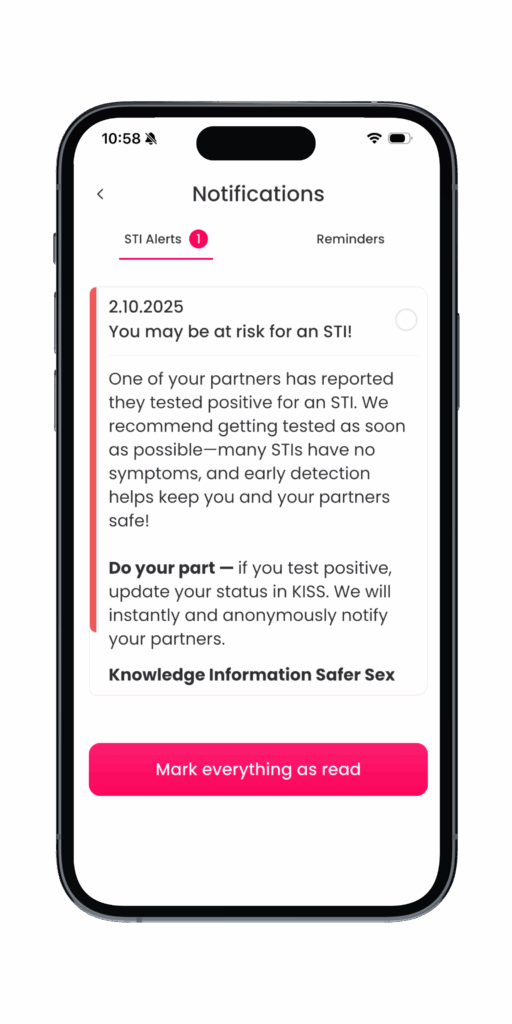
- Receive an alert if a past partner reports an STI
- Keep important sexual-health information organized
KISS does not replace medical advice, diagnosis, testing, or treatment. It gives users private tools that can make sexual-health awareness and partner communication easier.
Frequently Asked Questions About Gonorrhea
Yes. Gonorrhea can spread through oral sex and infect the throat. Throat infections frequently cause no symptoms.
A urine test is generally used to look for genital or urethral infection. A throat swab is needed to test specifically for throat gonorrhea.
Not reliably. A rectal swab is used to test specifically for infection in the rectum.
Symptoms may improve or disappear, but that does not reliably mean the infection is gone. Untreated gonorrhea can continue to spread and may cause permanent complications.
Yes. Treatment does not create immunity. A person can acquire gonorrhea again from an untreated partner or a new exposure.
Symptoms may appear within approximately 1–14 days, but many people never notice symptoms.
Wait at least seven days after treatment and until all partners have completed treatment and symptoms have resolved.
Untreated gonorrhea can lead to pelvic inflammatory disease, reproductive-system scarring, ectopic pregnancy, and infertility. It can also cause inflammation near the testicles and, in rare cases, contribute to infertility.
CDC guidance recommends a test of cure approximately 7–14 days after treatment for throat gonorrhea.
Yes. Recent partners should be informed so that they can receive evaluation, testing, and treatment. KISS provides a private option for anonymous partner notification.
Related Sexual Health Resources
Continue learning with these KISS resources:
Medical Disclaimer
This page is for general educational purposes and does not replace medical advice, diagnosis, or treatment. Testing and treatment recommendations can change and may differ based on a person’s health, pregnancy status, allergies, body sites exposed, and local guidance. Contact a qualified healthcare provider or sexual-health clinic if you have symptoms, a known exposure, or questions about testing and treatment.