


KISS helps users learn about common STIs and STDs, including symptoms, testing, prevention, partner communication, and safer sex habits.
Sexual health information can feel confusing, especially because many people use the terms STI and STD interchangeably. KISS uses both terms so users can find clear education, understand testing options, and take action with more confidence.
The Knowledge section inside KISS is designed to make STI and STD information easier to understand, less stigmatized, and easier to connect to real-life sexual health decisions.
What are common STIs and STDs?
Common STIs and STDs include infections such as chlamydia, gonorrhea, syphilis, herpes, HPV, HIV, trichomoniasis, and hepatitis B.
Some STIs are bacterial and may be curable with treatment. Others are viral and may be managed with medical care, prevention tools, vaccines, or ongoing treatment. Because symptoms are not always obvious, testing is one of the most important ways to know your status.
KISS helps users learn about STI and STD information in a private, easy-to-understand way through the Knowledge section of the app.
STI and STD statistics show why education matters
STIs are common, and many infections do not cause obvious symptoms. That is one reason testing, prevention, and sexual health education are so important.
A few key STI and STD statistics:
- More than 1 million curable STIs are acquired every day worldwide.
- In 2024, more than 2.2 million cases of chlamydia, gonorrhea, and syphilis were reported in the United States.
- CDC estimates that about 1 in 5 people in the United States had an STI on any given day in 2018.
- HPV is the most common STI in the United States, and CDC estimates that about 85% of people will get an HPV infection in their lifetime.
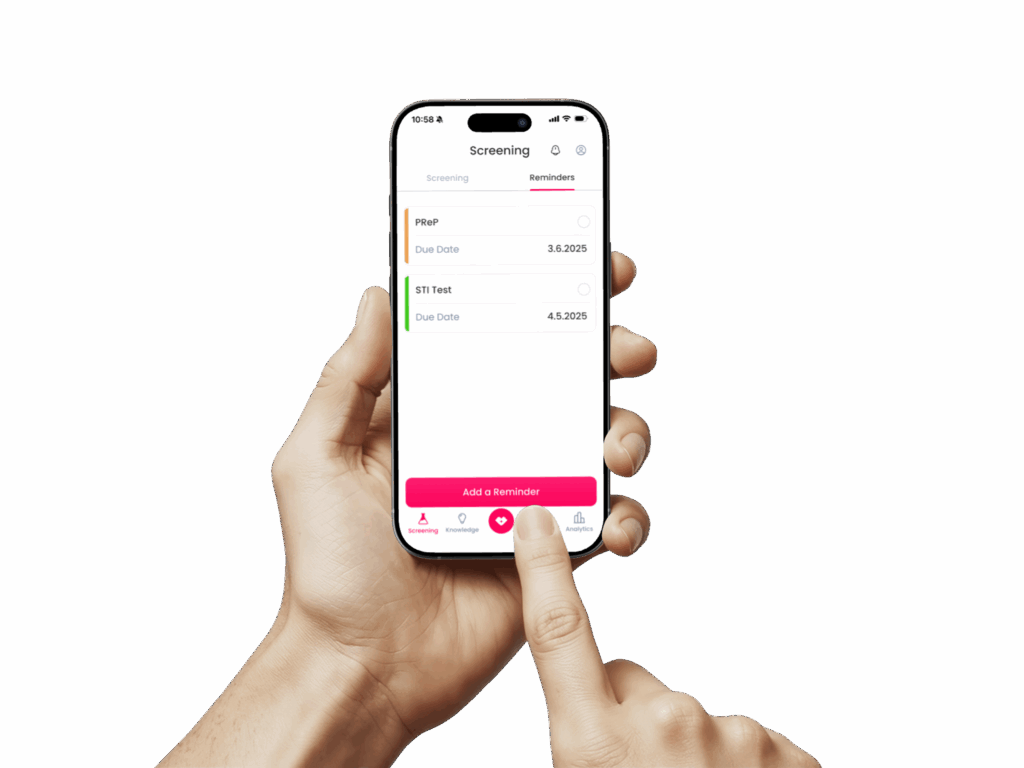
KISS helps users connect STI information with practical tools like sexual health education, testing reminders, partner alerts, and safer sex habits.
STI symptoms are not always obvious
Some STIs and STDs can cause symptoms such as discharge, sores, bumps, pain, burning, itching, rash, or unusual changes in the body. But many STIs may have no symptoms or only mild symptoms, which means a person can have an infection and not know it.
That is why testing, sexual health education, and honest partner communication matter. KISS helps users connect STI information with practical tools like testing reminders, partner alerts, and safer sex education.
Testing and prevention help reduce STI risk
STI prevention is not about shame. It is about having better information, using available tools, and making choices that support your health.
Prevention can include routine testing, condoms, PrEP, DoxyPEP when appropriate, vaccines, honest partner communication, and knowing what to do after a possible exposure.
KISS helps users turn STI and STD education into action by connecting information with testing reminders, partner alerts, encounter tracking, and safer sex tools.
Learn more with KISS
KISS helps users connect STI and STD education with real tools for sexual health.
For broader education, users can explore STI information and sexual health education inside KISS.
For partner communication, users can also learn how KISS supports private partner alerts through our anonymous STI notification app.
For a broader overview, users can also read our STD information guide covering symptoms, testing, treatment, prevention, and sexual health statistics.
Download KISS for STI and STD education
KISS helps users learn about common STIs and STDs, understand testing and prevention, set reminders, send partner alerts, and manage sexual health more privately.
Download KISS on iOS or Android to access sexual health education and safer sex tools in one app.
Frequently Asked Questions
What are the most common STIs and STDs?
Common STIs and STDs include chlamydia, gonorrhea, syphilis, HPV, herpes, HIV, trichomoniasis, and hepatitis B.
Can someone have an STI without symptoms?
Yes. Many STIs may have no symptoms or only mild symptoms, which is why testing is important even when someone feels fine.
What is the difference between an STI and an STD?
STI stands for sexually transmitted infection. STD stands for sexually transmitted disease. Many people use the terms interchangeably, so KISS includes both STI and STD education.
How can people reduce STI risk?
Prevention can include routine testing, condoms, PrEP, DoxyPEP when appropriate, vaccines, partner communication, and safer sex habits.
Does KISS replace a doctor or clinic?
No. KISS is not a substitute for medical advice, diagnosis, or treatment. If you have symptoms, test positive, or think you may have been exposed to an STI, consider getting tested and speaking with a healthcare provider.