
HPV: SYMPTOMS, SCREENING, VACCINE & CANCER PREVENTION
Extremely common. Often invisible.
Still worth understanding.
Human papillomavirus (HPV) is a group of common viruses spread through intimate skin-to-skin contact. Most infections clear naturally, but some types cause genital warts and persistent high-risk types can lead to cancer.
Information without stigma. KISS does not diagnose, screen for HPV, or replace medical care.
SCIENTIFIC ILLUSTRATION
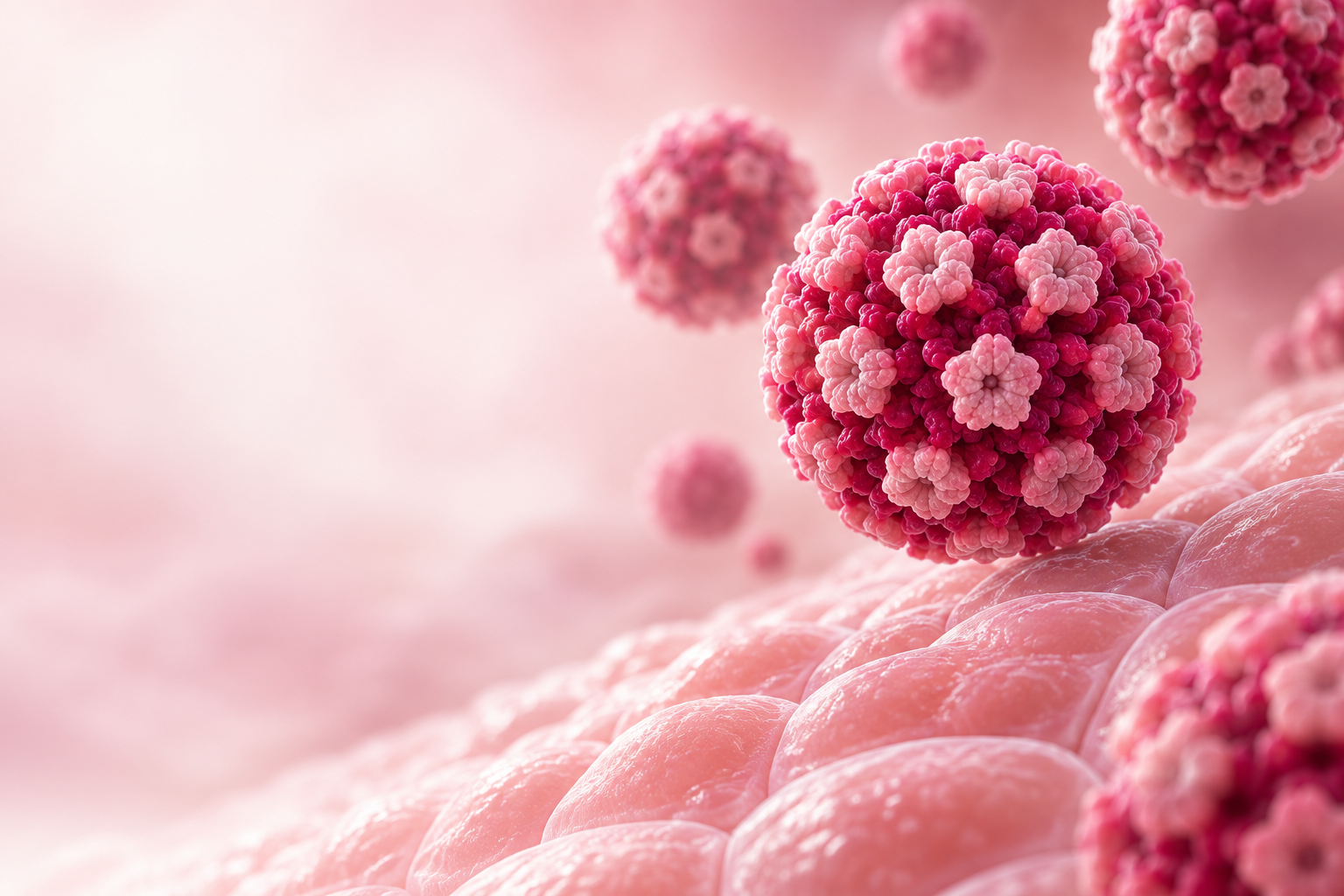
Illustrative rendering of human papillomavirus near epithelial cells. Not a diagnostic image.
THE MOST IMPORTANT THING TO KNOW
Most HPV infections clear naturally.
Persistent high-risk HPV is what matters.
Having HPV does not mean someone has cancer or was recently unfaithful. HPV can remain undetected for years, and most infections cause no noticeable symptoms. Screening and vaccination—not blame—are the useful next steps.

WHAT IS HPV?
One virus family.
Different health effects.
HPV includes more than 200 related viruses. Sexually transmitted types are commonly described as low risk or high risk based on whether they are associated with cancer.
HPV spreads through vaginal, anal, or oral sex and other intimate skin-to-skin contact. A person can pass HPV without signs or symptoms, and condoms reduce—but do not eliminate—risk because exposed skin may not be covered.
Quick facts:
It affects every gender. Anyone who has intimate sexual contact can acquire HPV.
Warts are not cancer. The HPV types that commonly cause genital warts are usually different from the high-risk types linked to cancer.
Timing is hard to know. A positive HPV result cannot reliably show when the infection began or which partner transmitted it.
HPV SYMPTOMS
Often no symptoms.
Sometimes visible changes.
Most HPV infections are silent. Symptoms depend on the HPV type and the part of the body affected.
01
No noticeable symptoms
Most people never know they have HPV. The immune system clears most infections within one to two years without causing disease.
02
Genital warts
Some low-risk HPV types can cause small bumps or groups of bumps around the genitals or anus. A clinician can confirm the diagnosis and discuss treatment options.
03
Cell changes rarely feel different
Precancerous cervical changes commonly cause no symptoms. That is why guideline-based screening matters even when you feel healthy.
HPV SCREENING & ABNORMAL RESULTS
Screen the cervix.
Follow the result.
HPV tests look for high-risk HPV in cervical samples, while Pap tests look for cervical cell changes. Screening schedules depend on age, health history, prior results, pregnancy, immune status, and local guidelines.
01
HPV and Pap tests
These may be used alone or together for cervical cancer screening. A routine STI panel does not automatically include an HPV test.
02
An abnormal result is not cancer
It may mean high-risk HPV or cell changes were found. Many abnormalities resolve, while others need repeat testing, colposcopy, or treatment.
03
Screening is site-specific
Cervical screening is established; screening for other HPV-related cancers is not routinely recommended for everyone. Ask a clinician what applies to your anatomy and risk.
HPV VACCINATION
Prevention that can stop
cancer before it starts.
HPV vaccination helps prevent new infections with HPV types that cause most HPV-related cancers and genital warts. It does not treat an existing infection, but it may still protect against types you have not encountered.
ROUTINE VACCINATION
CDC recommends vaccination at ages 11–12 and allows it to begin at age 9.
CATCH-UP VACCINATION
Vaccination is recommended through age 26 if the series was not completed earlier.
AGES 27–45
Some adults may choose vaccination after discussing likely benefits and new-exposure risk with a clinician.
HPV BY THE NUMBERS
Cancer risk has context.
The numbers matter.
HPV does not cause 79% of all cancers. Among cancers diagnosed at the six body sites where HPV is commonly found, CDC estimates that 79% are probably caused by HPV.
WORLDWIDE · EACH YEAR
690,000
“Every year HPV causes an estimated 690,000 cancers worldwide.”
HPV-ATTRIBUTABLE CANCERS
The percentage depends
on the cancer site.
These CDC estimates describe the share of cancers at specific HPV-associated sites that are probably caused by HPV—not the share of all cancers overall.
91% · 75% · 69%
Cervical, vaginal, and vulvar
CDC estimates HPV probably causes 91% of cervical, 75% of vaginal, and 69% of vulvar cancers.
91% · 63%
Anal and penile
CDC estimates HPV probably causes 91% of anal cancers and 63% of penile cancers.
70%
Oropharyngeal
CDC estimates HPV probably causes 70% of oropharyngeal cancers in the back of the throat. View the CDC table →
GOOD TO KNOW BEFORE YOU GO
HPV FAQs
Does HPV mean my partner cheated?
No. HPV can remain undetected for years, so a positive result usually cannot identify when or from whom it came.
Can HPV be cured?
There is no medicine that removes HPV itself. Most infections clear naturally; genital warts and precancerous cell changes can be treated.
Are genital warts cancer?
No. The HPV types that commonly cause genital warts are different from those most often associated with cancer.
Does a standard STI panel test for HPV?
Usually not. HPV and Pap testing are cervical cancer screening tests, not universal tests for every body site.
Do I still need screening after vaccination?
Yes, if you have a cervix and fall within screening guidelines. Vaccination prevents many—but not all—cancer-associated HPV types.
Should I tell a partner?
There is no one-size-fits-all script. Clear, non-blaming communication can help partners understand HPV’s prevalence, prevention, and limits of testing. Plan the conversation →
TRUSTED HEALTH GUIDANCE
What leading health authorities say.
This page is grounded in current guidance from the CDC, World Health Organization, American Sexual Health Association, and National Cancer Institute.
WORLD HEALTH ORGANIZATION
“Cervical cancer is largely preventable through HPV vaccination and regular screening.”
NATIONAL CANCER INSTITUTE
“Most HPV infections go away on their own without causing cancer.”
Sources reviewed September 14, 2026. Guidance changes over time; follow the recommendations of your clinician and local health authority.
A note about medical care: This page is educational and is not a substitute for diagnosis, screening, vaccination advice, or treatment from a qualified healthcare professional. Recommendations vary by age, anatomy, immune status, pregnancy, health history, and location. Written by the KISS Editorial Team · Last reviewed September 14, 2026. Sources: CDC, WHO, ASHA, and NCI.
KEEP YOUR HEALTH INFORMATION CONNECTED
Knowledge, timelines, and reminders.
In one private app.
Use KISS to learn about sexual health, organize testing and screening moments, and keep the next step visible—without shame or judgment.